

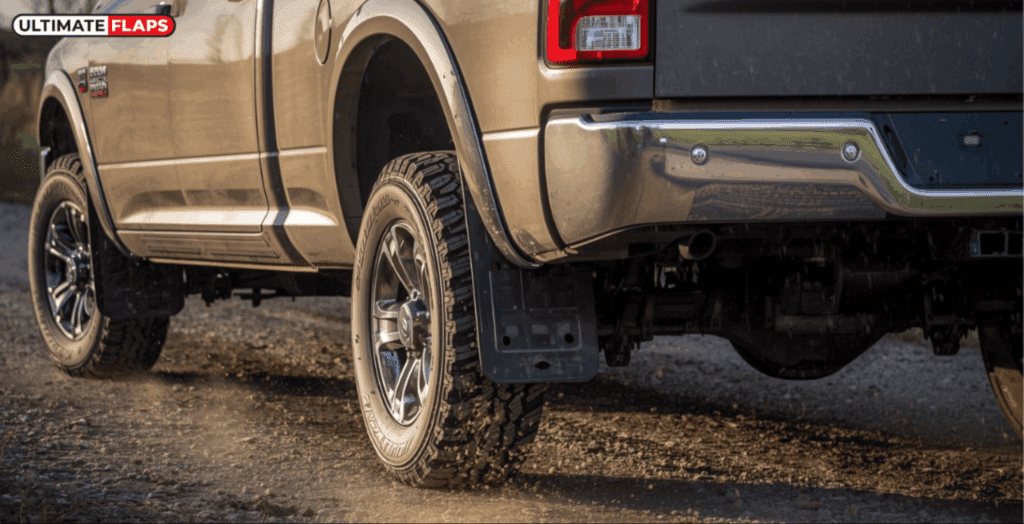
Mud guards are your truck’s frontline defense against the constant barrage of rocks, gravel, mud, and road debris that tires kick up during every drive. These protective barriers redirect harmful materials away from vulnerable surfaces, preventing paint damage, rust formation, and costly undercarriage repairs that can drain your wallet over time. Splash guards function by catching debris before it reaches critical components, body panels, or vehicles traveling nearby. The right mud guards maintain your truck’s appearance, protect mechanical systems, and demonstrate responsible ownership on shared roads. Whether you operate a standard pickup, work truck, or specialized configuration, proper protection preserves your investment while keeping fellow motorists safe from projectiles. In this post, we will discuss how mud guards protect your truck from road debris and damage, why they matter for off-road, dually, and flatbed trucks, and the performance differences between rubber and poly mud guards.
How Mud Guards Protect Your Truck from Road Debris and Damage?
Mud guards work quietly in the background, but their impact becomes obvious after years of use. After running trucks with and without them, the difference in wear, cleanup, and repairs is easy to spot. That protection shows up in several key ways:
- Prevents Paint Damage and Rust Formation: Mud guards shield your truck’s paint from rocks, grit, and moisture, helping reduce paint damage and lowering the risk of rust and corrosion over time.
- Protects Undercarriage Components: Truck splash guards prevent mud and debris from reaching critical components like brake lines, fuel lines, and suspension, helping them last longer.
- Shields Other Vehicles from Flying Debris: Mud flaps reduce the risk of rocks and debris hitting nearby vehicles, promoting safer driving and minimizing damage.
- Reduces Cleanup Time and Maintenance Costs: Dually splash guards minimize the buildup of mud and salt, reducing cleaning frequency and lowering long-term maintenance costs.
- Maintains Better Visibility During Wet Conditions: Mud guards redirect water and slush downward, reducing rearward spray and helping keep rear windows, mirrors, and backup cameras cleaner during bad weather.
Why Mud Guards Matter for Off-Road, Dually and Flatbed Trucks?
Off-road, dually, and flatbed trucks face harsher conditions than standard pickups. Wider tires, exposed beds, and heavy loads increase debris throw, making mud guards essential rather than optional equipment. Each of these configurations introduces specific risks that standard splash protection is not designed to handle.
- Off-Road Terrain Generates Extreme Debris Volumes: Off-road trails and job sites generate high volumes of clay, rocks and mud, requiring heavy-duty mud guards designed to withstand frequent impacts.
- Dually Trucks Need Coverage for Wider Wheel Spacing: Dually mud guards provide full coverage for dual rear wheels, protecting truck components and preventing debris from causing damage.
- Flatbed Trucks Expose More Vehicle Components: Mud flaps for flatbed trucks block tire spray, helping safeguard exposed components such as frame rails, wiring, and fuel tanks.
- Commercial Operations Require DOT Compliance: Proper mud flaps for dually flatbed trucks help meet DOT coverage requirements, reducing the risk of citations and fines.
- Heavy Loads Increase Tire Flex and Debris Projection: Under heavy loads, dually trucks can project debris farther due to increased tire flex, making heavy-duty mud flaps essential for maintaining consistent protection.
Rubber vs Poly Mud Guards: Which Performs Better?
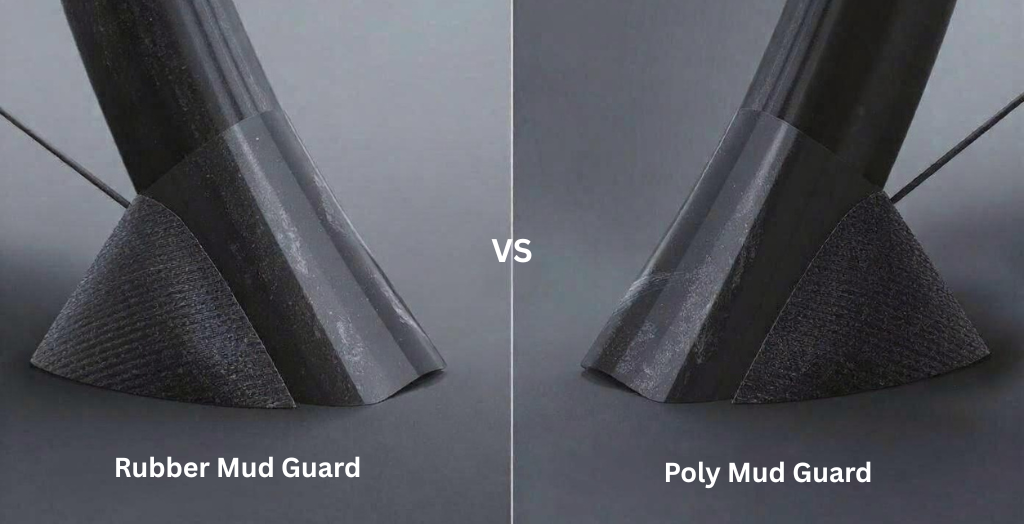
Choosing between rubber truck mud flaps and poly mud flaps usually comes down to durability, stiffness, and long-term performance. After living with both types, the differences become very clear.
Durability in Extreme Temperatures: Poly mud flaps perform well in both extreme cold and heat, while rubber truck mud flaps can stiffen and become more prone to cracking in freezing conditions.
Impact Resistance and Flexibility: Polyethylene mud flaps handle repeated impacts without cracking, whereas rubber mud flaps may tear or wear faster under continuous abuse.
Weight and Mounting Stability: Poly mud flaps stay more stable at highway speeds due to their stiffness, while rubber flaps can flex or flutter if not properly weighted or supported.
Resistance to Road Chemicals and UV Exposure: Poly mud flaps resist degradation from road chemicals and UV exposure, unlike rubber, which tends to wear out more quickly under prolonged exposure..
Long-Term Cost Effectiveness: While rubber mud flaps are cheaper initially, poly mud flaps typically last longer, reducing replacement frequency and offering better long-term value.
Why Ultimate Flap Mud Guards Are Worth the Upgrade
Ultimate Flaps clearly delivers long-term protection that holds up in real driving conditions. Built from nearly indestructible polyethylene with 304 stainless steel weights and welded hardware, these mud guards stay secure without cracking, tearing, or loosening over time. The lifetime warranty adds confidence that the investment remains protected. Custom laser-cut fitment provides accurate coverage for specific truck models, while powder-coated black weight options offer clean, understated styling. Contact us today to discuss your requirements.