

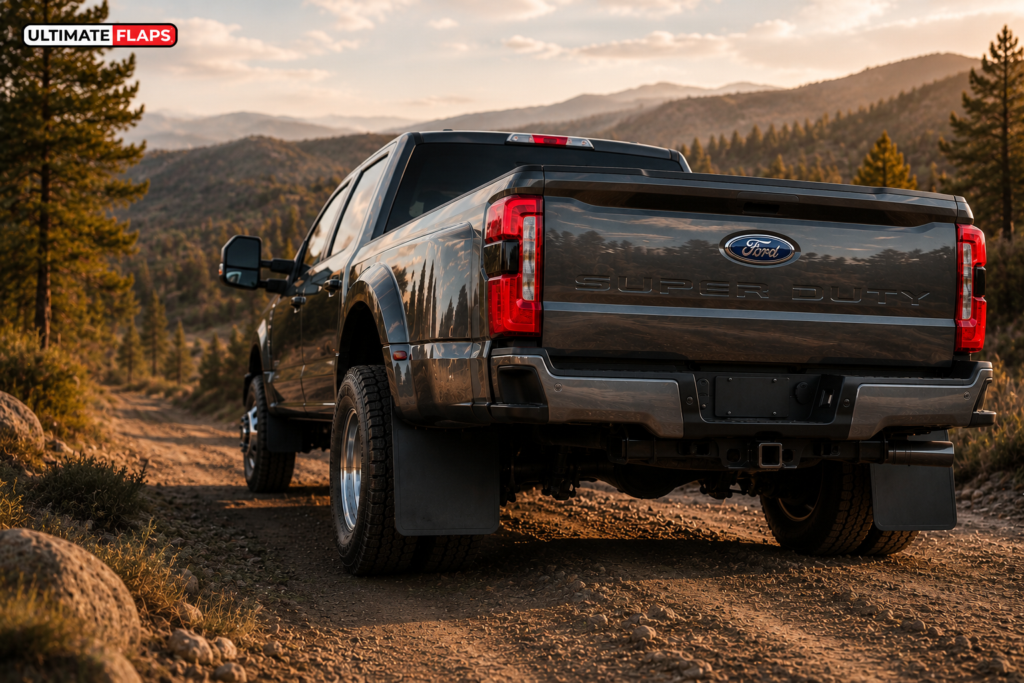
Ford dually trucks are built to handle demanding jobs, whether that means towing heavy trailers, hauling equipment, or covering long highway miles. Models like the Ford F350 and Ford F450 offer exceptional stability and payload capacity due to their dual rear wheel configuration. However, the same design that improves towing performance can also create unique challenges when it comes to road debris, mud, water spray, and rock protection.
For truck owners who have upgraded to aftermarket wheels and tires, these challenges can become even more pronounced. Wider tires, altered wheel offsets, and custom setups often change how debris is thrown from the vehicle, making proper mud flap selection more important than ever.
This post explores the key factors to consider when choosing Ford dually mud flaps, including coverage requirements, material options, fitment considerations, and the impact of aftermarket wheels. It also discusses how different mud flap designs perform on Ford F350 and F450 dually trucks to help you make a more informed decision.
What Makes Ford Dually Trucks Different from Standard Pickups
Understanding how Ford dually trucks differ from standard pickups can help explain why they often require specialized mud flaps and broader tire coverage.
- Dual Rear Wheel Configuration: Unlike standard pickups that use a single rear wheel on each side, dually trucks feature two rear wheels per side. This design helps increase payload capacity and towing stability, making dually models a popular choice for hauling heavy loads and large trailers.
- Wider Rear Stance and Increased Coverage Needs: The additional rear wheels create a wider rear tire footprint and overall rear track width than what is found on most single rear wheel trucks. As a result, dually models often require broader tire coverage to help manage road spray and debris generated by the rear tires.
- Increased Road Spray and Debris: As dually trucks have a wider rear tire configuration, water, mud, gravel, and other debris can be dispersed across a larger area than on many standard pickups. This is particularly noticeable when towing, driving on gravel roads, or operating in worksite environments where loose material is common.
Do Ford Dually Trucks Really Need Mud Flaps
While mud flaps are often viewed as an accessory, they can serve an important protective function on heavy-duty trucks.
- Protecting Your Truck: Road debris can chip paint, damage lower body panels, and contribute to cosmetic wear over time. Mud flaps help reduce the amount of debris that reaches vulnerable areas of the truck.
- Protecting Trailers and Equipment: Many Ford dually owners use their trucks for towing. Rocks, gravel, and other debris projected by the rear tires can impact trailer surfaces, RVs, horse trailers, and other equipment being towed.
- Improving Road Safety: Mud flaps can help reduce tire-generated water spray during wet driving conditions, which may improve visibility for motorists traveling behind the vehicle.
For trucks that regularly tow, haul, or operate in demanding environments, mud flaps can provide an additional layer of protection for both the vehicle and the equipment it pulls.
Why Proper Fitment Matters for Ford Dually Mud Flaps
Ford dually trucks have unique tire and wheel configurations that can affect how road debris, water, and mud are dispersed behind the vehicle. Choosing the right mud flaps helps ensure adequate tire coverage and effective debris control.
- Dually Trucks Require More Coverage: Unlike standard pickups, dually models feature two rear wheels on each side of the axle, creating a wider rear footprint. This wider stance can disperse road spray, gravel, and other debris across a larger area, making proper mud flap coverage especially important.
- Mud Flap Width Matters: Mud flaps that are too narrow may leave portions of the rear tires exposed, reducing their ability to help manage debris and road spray.
- Aftermarket Wheels Can Change Fitment Requirements: Wider wheels, larger tires, and modified wheel offsets can extend the tire beyond the factory body lines, potentially increasing debris projection and affecting mud flap coverage.
- Vehicle-Specific Fitment Helps Improve Protection: Selecting mud flaps designed for dually trucks and compatible with your wheel and tire setup can help provide more effective coverage for the truck, trailer, and surrounding vehicles.
What to Look for When Choosing Ford Dually Mud Flaps
Not all mud flaps are designed for the unique requirements of dually trucks. Factors such as tire coverage, material durability, mounting hardware, and vehicle modifications can all influence how effectively a mud flap performs.
- Wide Coverage for Dually Tires: Coverage is a key factor when choosing Ford dually mud flaps. The wider rear tire configuration on Ford dually trucks can disperse road spray and debris across a larger area than standard pickups. When selecting Ford F350 mud flaps or Ford F450 mud flaps, adequate tire coverage should be a primary consideration.
- Durable Materials: Heavy-duty trucks expose mud flaps to road debris, moisture, UV exposure, temperature changes, and towing demands. Material selection can influence a mud flap’s durability, flexibility, and long-term performance.
Common material options include:
- Heavy-Duty Rubber Mud Flaps: Rubber mud flaps are commonly used on work trucks and towing vehicles because they offer flexibility and good impact resistance. Their ability to flex when struck by debris can help reduce the likelihood of cracking in certain conditions.
- Poly and Molded Plastic Mud Flaps: These mud flaps typically provide a molded appearance and lightweight construction. They are commonly used on trucks where a factory-style look is preferred and generally resist corrosion and moisture exposure.
- Composite Material Mud Flaps: Some custom-fit mud flaps use composite materials designed to balance strength, flexibility, and durability. Performance characteristics vary by manufacturer and product design.
- Strong Mounting Systems: The effectiveness of a mud flap depends not only on the flap itself but also on how securely it is mounted to the vehicle.
Look for mounting systems designed to provide:
- Secure attachment to the truck
- Resistance to vibration during normal driving
- Stability at highway speeds
- Long-term durability under regular use
Properly installed mounting hardware can help maintain consistent mud flap positioning and coverage over time.
- Compatibility with Your Truck Setup: Vehicle modifications such as tire size, wheel offset, suspension changes, and towing equipment can affect mud flap fitment and coverage requirements. For trucks with aftermarket wheels, choosing aftermarket wheel mud flaps that match your specific wheel and tire configuration can help provide proper coverage and fitment.
Aftermarket Wheel Mud Flaps: Understanding Fitment Challenges
Many truck owners upgrade their wheels and tires for appearance, performance, or towing needs. While these modifications can enhance the vehicle, they can also affect mud flap fitment and coverage requirements.
- Wheel Offset Changes Tire Position: Wheel offset determines how far a wheel sits inward or outward relative to the hub. When aftermarket wheels move the tire farther outward, portions of the tire may extend beyond the original coverage area provided by factory-sized mud flaps.
- Clearance and Rubbing Concerns: Some wheel and tire combinations reduce clearance around suspension components, fenders, and other vehicle parts. Mud flaps should be positioned to maintain adequate clearance during suspension travel, vehicle loading, and normal operation.
- Wider Tires Require Wider Protection: Wider tires can disperse water, mud, and road debris across a broader area than narrower factory tires. Aftermarket wheel mud flaps should provide sufficient width and coverage to accommodate these changes.
Custom vs Universal Dually Mud Flaps
Ford dually trucks often have unique coverage requirements, particularly when equipped with aftermarket wheels or wider tires.
- Universal Mud Flaps: Universal mud flaps are designed to fit a variety of vehicles, but coverage and fitment can vary depending on tire size, wheel offset, and truck modifications.
- Custom Dually Mud Flaps: When aftermarket wheels, larger tires, or towing applications are involved, truck mud flaps custom designed for the vehicle can provide better overall fitment and protection. For many owners, custom mud flaps truck solutions help eliminate the compromises often associated with universal products.
Common Mistakes to Avoid When Buying Ford Dually Mud Flaps
Choosing the wrong mud flap can affect coverage, fitment, and long-term performance.
- Choosing Mud Flaps That Are Too Narrow: Insufficient width can leave portions of the tires exposed and reduce debris protection.
- Ignoring Wheel Offset: Aftermarket wheels can significantly change how debris is projected from the truck. Always consider wheel position when selecting mud flaps.
- Selecting Low-Quality Materials: Heavy-duty trucks often demand more durable solutions than basic consumer-grade products can provide.
- Overlooking Mounting Hardware: Weak brackets and mounting components can lead to movement, vibration, or premature failure.
- Assuming One Size Fits All: Every truck setup is different. Tire size, wheel offset, towing requirements, and vehicle modifications should all be evaluated before deciding.
Choosing Mud Flaps for Ford F350 and F450 Dually Trucks
Ford F350 and Ford F450 dually trucks are often used for towing, hauling, and other demanding tasks, making proper mud flap coverage an important consideration for both vehicle and trailer protection.
- Ford F350 Mud Flaps: Ford F350 mud flaps are commonly used on trucks that tow campers, equipment trailers, horse trailers, and work trailers. As these trucks often operate on both highways and job sites, adequate tire coverage can help manage road spray and debris.
- Ford F450 Mud Flaps: Ford F450 mud flaps are frequently used on trucks involved in commercial, agricultural, and heavy-duty towing applications. Their wider rear tire configuration often requires mud flaps that provide substantial coverage and durable construction.
Find the Right Mud Flaps for Your Ford Dually Truck
Looking for Ford dually mud flaps for aftermarket wheels? Ultimate Flaps offers adjustable mud flap solutions engineered to provide customizable tire coverage for a wide range of truck configurations. Explore the lineup to find an option that fits your vehicle and towing needs.
Frequently Asked Questions
In most cases, yes. The wider rear tire footprint of dually trucks often requires greater coverage than standard pickup applications.
Yes. Wheel offset and tire width can change tire positioning and influence how debris is thrown from the vehicle.
Custom-fit mud flaps are generally designed to match specific truck configurations, which can improve coverage and fitment.
The ideal material depends on the application, but heavy-duty rubber and advanced composite materials are commonly selected for demanding environments.
Mud flaps can help reduce the amount of debris reaching trailers and towed equipment, particularly during highway travel.
Consider tire width, wheel offset, required coverage area, material durability, and compatibility with your truck’s specific setup.