

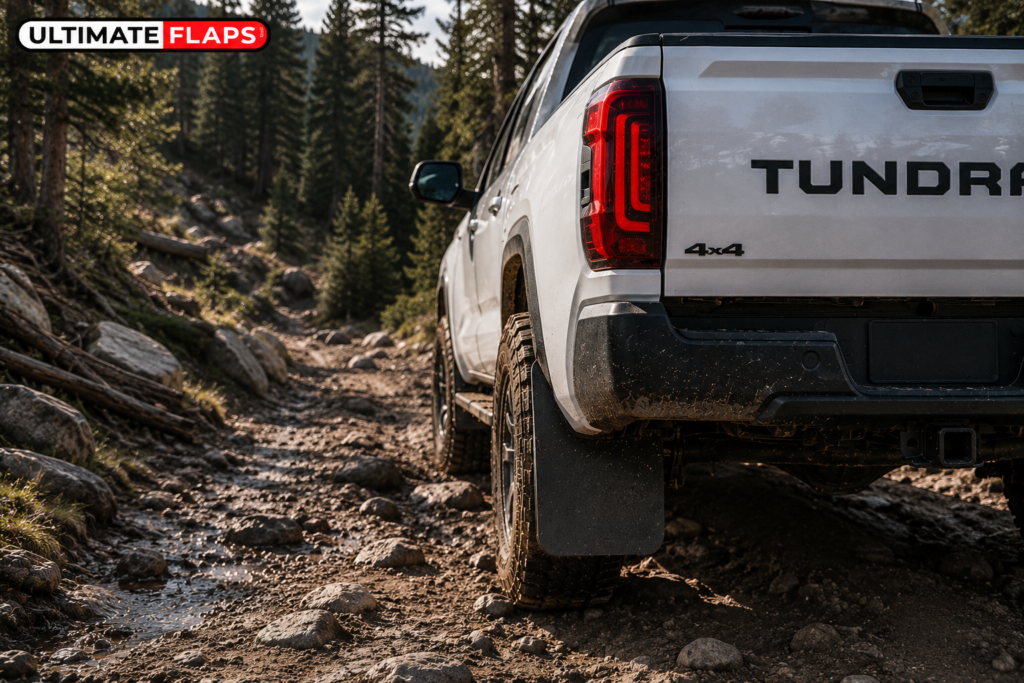
Toyota trucks are designed to handle demanding conditions, from daily commutes and job sites to off-road trails and towing duties. However, whether you drive a Tacoma or a Tundra, your truck is constantly exposed to road debris, mud, gravel, water spray, and other elements that can affect its appearance over time.
Installing the right mud flaps is one of the simplest ways to help protect your truck’s paint, body panels, and undercarriage. However, not all mud flaps offer the same fit, coverage, or installation experience. Understanding fitment, materials, and mounting options can help you choose mud flaps that work with your specific truck configuration. This post discusses everything you need to know about Toyota Tacoma mud flaps, Toyota Tundra mud flaps, material options, fitment considerations, and no-drill installation solutions.
Why Mud Flaps Matter for Toyota Trucks
Whether on highways, job sites, or off-road trails, Toyota trucks encounter mud, gravel, and road spray. Properly fitted mud flaps for Toyota trucks help reduce debris buildup and support long-term vehicle protection.
- Protection Against Paint Chips and Road Debris: Gravel, rocks, and road debris can be kicked up by the tires, especially on highways, construction zones, and unpaved roads. Mud flaps help reduce direct impact on lower body panels, rocker panels, and rear fenders that are often most exposed.
- Reduced Mud, Water, and Road Spray: Driving through rain, mud, or slush can create significant spray behind and alongside the truck. Mud flaps for Toyota trucks help control the amount of water and debris thrown by the tires, helping keep the vehicle cleaner and improving visibility for surrounding drivers.
- Additional Protection for Towing Applications: Tacoma and Tundra owners frequently tow trailers, campers, boats, and work equipment. Mud flaps can help reduce debris projected toward trailers and cargo, providing an extra layer of protection during travel.
- Support for Off-Road and Adventure Use: Many Toyota truck owners venture beyond paved roads where mud, gravel, and loose terrain are common. Mud flaps help limit the amount of material thrown against the truck body during off-road driving, helping maintain the vehicle’s appearance between adventures.
- Help Maintain a Cleaner, Better-Protected Truck: While no accessory can prevent every source of wear, mud flaps can help reduce the accumulation of dirt and road grime around wheel wells and lower body panels. This can make routine cleaning easier and help preserve the truck’s appearance over time.
Toyota Models That Benefit Most from Mud Flaps
While mud flaps can help protect virtually any pickup truck, they are particularly beneficial for the Toyota Tacoma and Toyota Tundra.
- Toyota Tacoma: The Toyota Tacoma is Toyota’s midsize pickup truck, known for its versatility on both paved and unpaved roads. Many Tacoma trims offer features such as increased ground clearance, all-terrain tires, and off-road-oriented suspension systems. These characteristics can increase the amount of mud, gravel, and debris projected by the tires, particularly when driving on dirt roads, trails, or construction sites. Properly fitted Toyota Tacoma mud flaps help provide additional wheel coverage and support protection for lower body panels.
- Toyota Tundra: The Toyota Tundra is Toyota’s full-size pickup truck, built to handle demanding tasks such as towing, hauling, and long-distance travel. Its larger tires, wider stance, and greater overall dimensions can contribute to increased road spray and debris projection, especially in wet weather or on loose surfaces. Toyota Tundra mud flaps help improve tire coverage and can provide added protection for the truck, trailers, and nearby vehicles.
Whether you’re looking for Toyota truck mud guards for daily driving, towing, work applications, or off-road adventures, selecting mud flaps designed for your specific model can help ensure proper fitment, coverage, and long-term performance.
What to Look for in Toyota Tacoma & Tundra Mud Flaps
Selecting mud flaps for a Toyota Tacoma or Toyota Tundra involves more than choosing a style or material. Evaluating fitment, coverage, installation requirements, and compatibility with your truck’s configuration can help ensure the mud flaps perform as intended.
- Vehicle-Specific Fitment: Confirm that the mud flaps are designed for your Tacoma or Tundra model year. Fitment requirements can vary between truck generations and trim levels.
- Tire and Wheel Compatibility: Tire size, wheel offset, and aftermarket wheel upgrades can influence mud flap clearance and overall fitment.
- Coverage Area: Mud flaps are available in different sizes and coverage configurations. The amount of coverage needed may depend on driving conditions and vehicle setup.
- Accessory Compatibility: Factory or aftermarket fender flares, lift kits, and running boards can affect mounting locations and available clearance.
- Material Construction: Rubber mud flaps and poly mud flaps offer different performance characteristics, including flexibility, rigidity, and resistance to weather exposure.
- Installation Method: Some mud flaps use existing factory mounting points, while others may require drilling or additional hardware for installation.
- Intended Vehicle Use: Daily commuting, towing, highway driving, and off-road travel can all influence the type of mud flap coverage that best suits a truck.
Tacoma & Tundra Fitment Guide
Toyota Tacoma Mud Flaps by Generation
Mud flap fitment can vary between Tacoma generations due to differences in body design, wheel well dimensions, mounting locations, and available trim configurations. Selecting mud flaps designed for the correct model year range can help support proper installation and coverage.
- 2nd Generation Tacoma (2005–2015): Second-generation Tacoma models were available in multiple cab and bed configurations, which can influence mud flap fitment. Owners should verify compatibility based on model year and any vehicle modifications, such as larger tires, aftermarket wheels, or lift kits, that may affect clearance.
- 3rd Generation Tacoma (2016–2023): The third-generation Tacoma introduced a redesigned body and updated wheel well geometry compared to previous models. As a result, mud flaps designed for second-generation trucks may not fit third-generation models. Owners with larger tire and wheel combinations should review clearance requirements before installation.
- 4th Generation Tacoma (2024+): The fourth-generation Tacoma features a new platform and revised body architecture that differs from earlier generations. These changes can affect mounting locations and fitment requirements, making model-specific mud flaps important for proper installation.
Toyota Tundra Mud Flap Fitment Considerations
Like the Tacoma, Tundra fitment requirements can vary by generation due to changes in body design, wheel well dimensions, and mounting points.
- 2nd Generation Tundra (2007–2021): Second-generation Tundra models were offered in multiple cab styles, bed lengths, and trim levels. Before purchasing mud flaps, owners should confirm compatibility with their specific vehicle configuration and any aftermarket modifications that could affect clearance.
- 3rd Generation Tundra (2022+): The third-generation Tundra was redesigned on Toyota’s TNGA-F truck platform and features different body panels and wheel well configurations than the previous generation. Selecting Toyota Tundra mud flaps designed specifically for 2022 and newer models can help support proper fitment and installation.
Factors That Affect Toyota Tacoma & Tundra Mud Flap Fitment
Even when mud flaps are designed for a specific vehicle, factors such as tire size, aftermarket accessories, and installation requirements can affect fitment. Reviewing compatibility details before purchase can help prevent common installation and clearance issues.
- Tire Clearance Issues: Larger tires or wheel modifications can reduce the space between the tire and mud flap, increasing the possibility of contact during steering or suspension movement.
- Incorrect Model-Year Fitment: Toyota Tacoma and Tundra designs have changed across generations. Mud flaps designed for one model year range may not fit another.
- Fender Flare Compatibility: Factory and aftermarket fender flares can affect mud flap fitment and may require mud flaps designed for those configurations.
- Mounting Point Differences: Mud flap attachment locations can vary by generation, trim level, or vehicle configuration, making model-specific fitment important.
- Universal Fit Limitations: Universal fit mud flaps may require drilling, trimming, or additional adjustments to accommodate a specific Toyota truck model.
- Aftermarket Accessory Interference: Running boards, rock sliders, and other accessories installed near the wheel wells can affect mud flap installation and clearance.
Mud Flap Materials Explained
The material used in a mud flap can influence its flexibility, rigidity, and performance under different operating conditions. Two common options for Toyota truck mud guards are rubber and poly materials.
- Rubber Mud Flaps: Rubber mud flaps are known for their flexibility and impact resistance. They can bend when encountering obstacles and generally remain flexible across a wide range of temperatures, making them a common choice for trucks operating on rough roads and worksites.
- Poly Mud Flaps: Poly mud flaps are manufactured from engineered polymer materials that provide greater rigidity than rubber. They are designed to maintain their shape during use and resist moisture, road debris, and environmental exposure.
Both materials can provide effective protection when properly fitted. The best choice depends on factors such as vehicle use, environmental conditions, desired flexibility, and personal preference.
No-Drill vs Traditional Mud Flap Installation
What Are No-Drill Mud Flaps?
No-drill mud flaps are designed to attach using existing factory mounting points or hardware rather than requiring new holes in the vehicle body. Installation methods vary by manufacturer and vehicle application.
Why Some Truck Owners Choose No-Drill Mud Flaps
No-drill mud flaps are a popular option for Toyota Tacoma and Toyota Tundra owners because they:
- Utilize Existing Mounting Locations: Many designs attach using factory mounting points already present on the vehicle.
- Avoid Additional Holes: Installation typically does not require drilling into body panels or wheel wells.
- Support Vehicle-Specific Fitment: Many no-drill systems are designed for specific truck models and model-year ranges.
- Can Be Removed if Needed: Mud flaps attached with factory hardware can often be removed using the reverse installation process.
Comparing No-Drill and Traditional Installation Methods
| Feature | No-Drill Mud Flaps | Traditional Installation |
|---|---|---|
| Mounting Method | Uses existing mounting points or hardware | May require new mounting holes |
| Vehicle Modifications | Typically minimal | May involve drilling or panel modifications |
| Installation Requirements | Depends on vehicle and product design | Depends on vehicle and product design |
| Removal Process | Often utilizes existing hardware | May leave drilled mounting holes |
| Fitment Approach | Common in vehicle-specific designs | Found in both custom-fit and universal-fit designs |
How to Install Mud Flaps on a Toyota Tacoma or Tundra
Installation procedures vary by manufacturer, vehicle generation, and mud flap design. Always follow the installation instructions provided with the product.
Tools You May Need
- Screwdriver
- Socket wrench or ratchet set
- Fasteners or brackets supplied with the mud flaps
- Vehicle-specific hardware (if required)
General Installation Steps
- Clean the wheel well and mounting area.
- Review the manufacturer’s installation instructions.
- Position the mud flap and align it with the designated mounting locations.
- Install the supplied hardware or mounting brackets.
- Tighten fasteners according to the manufacturer’s specifications.
- Verify alignment and check for adequate tire clearance.
- Perform a final inspection before driving.
Many no-drill mud flaps are designed to utilize existing mounting locations and can often be installed using common hand tools.
Find the Right Mud Flaps for Your Toyota Tacoma or Tundra
Choosing mud flaps shouldn’t involve trial and error. Ultimate Flaps offers custom-fit solutions engineered for different Toyota Tacoma and Toyota Tundra generations, helping ensure proper fitment, coverage, and installation. Contact our team today to find the right mud flaps for your truck.
Frequently Asked Questions
Many do, but compatibility depends on lift height, tire size, and wheel offset. Always verify fitment specifications before purchasing.
Many no-drill systems are engineered to provide secure attachment using factory mounting locations. Performance can vary by product design and vehicle setup.
Custom-fit mud flaps are designed for specific vehicle models, while universal options are intended to fit multiple vehicles and may require modifications.
Many no-drill systems are engineered to provide secure attachment using factory mounting locations. Performance can vary by product design and vehicle setup.
Both materials offer advantages. Rubber provides flexibility, while poly materials typically offer improved shape retention and a more refined appearance.
Many mud flap systems can be installed with basic hand tools. Installation difficulty depends on the product and mounting method.
Properly fitted mud flaps are designed to maintain adequate tire clearance. However, trucks with larger tires, lift kits, or wheel modifications should verify compatibility before installation.