

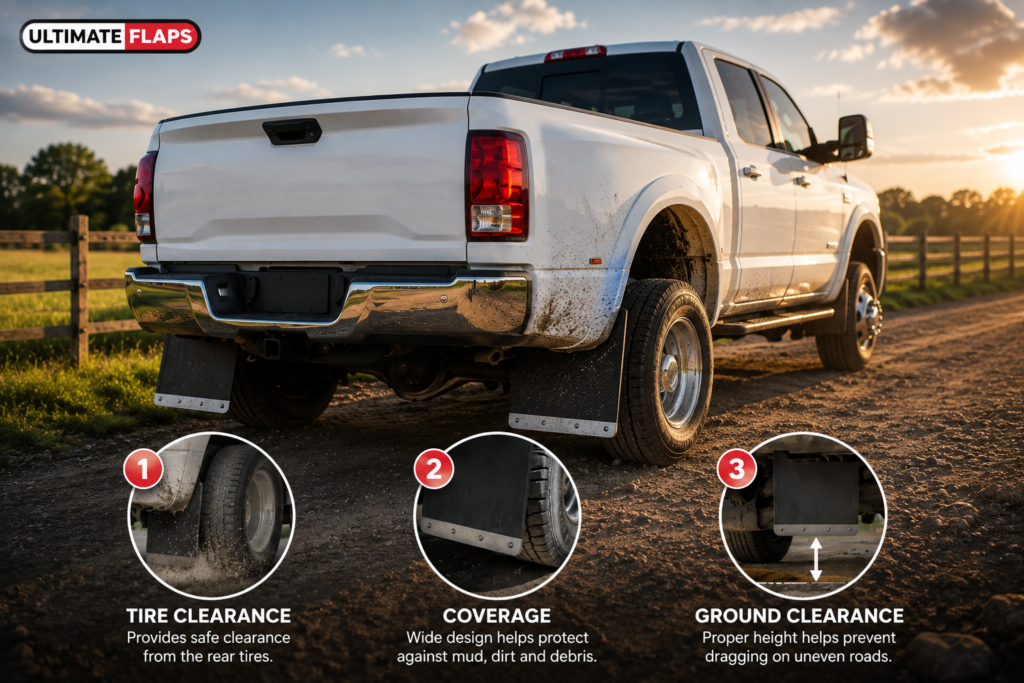
Dually trucks are built for demanding applications, such as heavy towing, hauling, commercial work, and long-distance travel. Their dual-rear-wheel (DRW) configuration increases load-carrying capability while creating a wider rear tire footprint that can expose more of the truck to mud, water spray, gravel, and road debris. Properly fitted dually mud flaps help manage debris and water spray from the rear tires while providing additional protection for the truck, trailer, and surrounding vehicles. However, fitment varies by manufacturer, model year, body configuration, wheel and tire setup, and aftermarket modifications.
Whether you need Ford dually mud flaps, Ram 3500 dually mud flaps, Chevrolet dually mud flaps, or GMC dually mud flaps, selecting the right product requires more than matching the truck’s make and model. Coverage, clearance, mounting position, fender flares, and wheel and tire specifications all influence fitment. This guide covers dually mud flap coverage, brand-specific fitment, and factors affecting compatibility, clearance, and protection.
What Should Dually Mud Flaps Cover?
Dually trucks have two rear tires on each side, creating a wider rear tire footprint than a single-rear-wheel truck. As a result, mud flaps for dually trucks should be designed to provide coverage across the complete dual-wheel configuration, including the outer tire. A flap sized only for the inner tire may leave portions of the outer tire and surrounding area exposed to mud, water, gravel, and road debris.
The required coverage depends on the truck’s body configuration, tire dimensions, mounting location, and intended use. When determining the appropriate mud flap coverage for a dually truck, consider the following factors:
- Coverage across the dual rear tires: The flap should extend across the rear tire area it is intended to protect, including the outer tire, without interfering with the wheels.
- Width and height: Flap dimensions should provide sufficient coverage for the tire setup while maintaining appropriate ground and tire clearance.
- Side coverage: The flap should be positioned to provide adequate coverage beyond the wider dual-wheel configuration and help control spray and debris traveling outward.
- Road spray and debris protection: The flap should provide enough coverage to help limit water, mud, gravel, and stones thrown toward the truck, trailer, and surrounding vehicles.
- Tire clearance: The flap should maintain sufficient clearance from both rear tires and nearby components during normal driving and suspension movement.
For modified trucks, tire size, wheel offset, fender flares, and suspension changes should also be considered when determining the appropriate coverage.
Ford, Ram, Chevy, and GMC Dually Mud Flaps: Fitment Differences
Although Ford, Ram, Chevrolet, and GMC all offer heavy-duty trucks with dual-rear-wheel configurations, their mud flap fitment is not universally interchangeable. Differences in body dimensions, wheel openings, factory mounting locations, fender configurations, and model-year design can affect mud flap fitment, coverage, and clearance.
The following table highlights the key fitment considerations across these four dually truck platforms:
| Fitment Factor | Ford Dually Mud Flaps | Ram Dually Mud Flaps | Chevrolet Dually | GMC Dually |
|---|---|---|---|---|
| Common Dually Application | F-350 Super Duty DRW | Ram 3500 DRW | Silverado 3500HD DRW | Sierra 3500HD DRW |
| Rear Fender Design | Wide Super Duty dually bedsides with generation-specific contours that affect flap shape and mounting points. | Distinct rear fender profile and wheel-opening dimensions require Ram-specific fitment. | Uses GM HD dually bedsides with wheel-opening shapes that differ from Ford and Ram. | Shares GM HD platform architecture but may have trim-specific styling differences affecting appearance and fit. |
| Factory Mounting Locations | Mounting points vary between Super Duty generations and may differ from other manufacturers. | Factory attachment locations are unique to Ram HD trucks and typically are not interchangeable with Ford or GM applications. | Mounting locations are designed around Silverado HD fender and wheel-well layouts. | Mounting locations generally follow Sierra HD body design and trim configurations. |
| Model-Year Considerations | Significant body updates between Super Duty generations can affect mud flap compatibility. | HD redesigns and generation changes may require different mud flap configurations. | Silverado HD redesigns can change wheel-opening geometry and mounting requirements. | Sierra HD generation updates can affect compatibility and installation hardware. |
| Fender Flare Considerations | Factory or aftermarket flares may require additional clearance or specialized brackets. | Fender flare options can alter mounting space around the wheel opening. | Certain trims and aftermarket flares can influence mud flap positioning. | Premium trims with unique exterior styling may require fitment verification. |
| Aftermarket Wheel and Tire Considerations | Larger-offset wheels or oversized tires may reduce clearance between the flap and tire. | Wheel offset changes can affect flap coverage and clearance around dual rear wheels. | Modified wheel and tire setups may require coverage and clearance checks. | Aftermarket wheel packages should be verified for proper clearance and debris protection. |
| Coverage Requirements | Mud flaps should extend sufficiently to protect the wider Super Duty dually stance. | Coverage should match the width and tire position of the Ram 3500 DRW setup. | Flaps should provide coverage across the Silverado HD dual-wheel track width. | Coverage should align with Sierra HD dually wheel positioning and body width. |
Dually Mud Flaps with Fender Flares: Fitment & Clearance
Fender flares can affect both the mounting position and coverage requirements of dually mud flaps. As flares extend outward from the truck body, they may change the available mounting space and the position of the mud flap relative to the rear tires. The design and width of the flare can influence where the mud flap sits and how much clearance is available. A mud flap that fits a standard factory configuration may not provide the same fitment after an aftermarket flare is installed.
Before purchasing mud flaps for a dually with fender flares, check:
- Fender flare design and dimensions: Determine how far the flare extends from the original body line and whether it changes the available mounting area.
- Tire position: Confirm the position of the inner and outer rear tires relative to the flare.
- Mounting locations: Check whether the flare covers, changes, or limits the intended mud flap mounting points.
- Mud flap width: Ensure the flap provides appropriate coverage without extending into the flare or tire.
- Clearance: Verify sufficient space between the mud flap, tires, fender flare, and nearby components.
- Product compatibility: Confirm that the mud flap manufacturer lists the specific flare configuration as compatible.
These checks are especially important for custom dually mud flaps, where the design is intended for a particular vehicle configuration. Proper fitment should provide the required coverage while maintaining adequate clearance during normal vehicle operation.
Dually Mud Flaps with Aftermarket Wheels & Tires
Aftermarket wheels and tires can change the position of the rear tires relative to the truck body and mud flaps. Larger or wider tires may require additional coverage, while wheel width and offset can change how far the tires extend from their original position. Suspension modifications can introduce additional fitment considerations. A lift kit or other suspension change can alter the tire’s position relative to the wheel opening and affect available clearance around the mud flap.
When selecting custom mud flaps for a modified dually truck, consider:
- Tire width and diameter: Consider how larger or wider tires may affect mud flap coverage and clearance.
- Wheel width and offset: Evaluate how wheel specifications may change the tire’s position relative to the truck body.
- Tire position: Confirm how far the tires extend inward or outward compared with the factory configuration.
- Lift or suspension modifications: Check how changes in ride height or suspension geometry may affect tire-to-flap clearance.
- Fender flares: Consider any additional changes to the body’s outer profile.
- Mounting locations: Verify that the original or intended mounting points remain accessible.
- Clearance: Ensure the mud flap remains clear of the tires and surrounding components during normal driving and suspension movement.
Signs Your Dually Mud Flaps May Need Adjustment or Replacement
Existing mud flaps may not provide adequate coverage if they were selected for a different configuration or installed without accounting for modifications to the truck’s tires, suspension, or body configuration.
The following signs may indicate that your dually mud flaps need improved coverage, positioning, or fitment:
- Excessive mud or water spray reaches the truck’s body.
- Gravel or other debris is being thrown beyond the covered tire area.
- Insufficient coverage of the outer rear tires.
- Visible gaps between the tire area and the mud flaps.
- Contact with tires or nearby components during normal operation.
- Excessive mud flap movement during normal driving.
Poor alignment with the truck body or intended mounting area.
Key Factors to Consider When Selecting Dually Mud Flaps for Your Truck
Selecting the right dually truck mud flaps start with identifying the truck’s complete configuration. Several factors can influence fitment, coverage, clearance, and installation requirements, including:
- Truck Make and Model: Ford, Ram, Chevrolet, and GMC dually trucks have different body and mounting designs. Select mud flaps specifically intended for the truck’s make and model rather than assuming that all dually applications use the same design. For Ford applications, verify that Ford F350 mud flaps dually are compatible with the truck’s specific model year, DRW configuration, and wheel and tire setup.
- Model Year: Mud flap fitment can change between generations as wheel openings, body designs, and mounting locations are updated. Verify that the selected mud flaps are compatible with the specific model year of your truck.
- Dual-Rear-Wheel Configuration: Confirm that the product is designed for a DRW truck rather than a single-rear-wheel application. Dually mud flaps should provide coverage appropriate for both the inner and outer rear tires.
- Tire Size: Larger or wider tires can affect both coverage and clearance. Compare the mud flap dimensions and available clearance with the truck’s actual tire size.
- Wheel Specifications: Wheel width and offset can affect how far the tires sit from the truck body and influence debris coverage. Aftermarket wheel specifications should be considered when determining the appropriate mud flap position.
- Fender Flares: Verify whether the mud flap is compatible with the truck’s factory or aftermarket flare configuration. Flares can change the available mounting space and clearance between the tire, flap, and body.
- Aftermarket Modifications: Lift kits, suspension changes, wheels, tires, and other modifications should be considered before ordering. These changes can alter tire position, clearance, and the amount of coverage required.
- Mounting Requirements: Check whether the product uses existing mounting points or requires additional hardware or modifications. Installation requirements can vary between products and vehicle applications, so the manufacturer’s instructions should be reviewed before installation.
- Intended Use: Highway driving, towing, hauling, construction, and off-road use can create different coverage requirements. Trucks regularly exposed to gravel, mud, or heavy road spray may benefit from mud flaps designed for greater coverage.
Shop Dually Mud Flaps for Your Truck
Looking for reliable dually mud flaps for your Ford, Ram, Chevrolet, or GMC truck? Ultimate Flaps offers custom-fit solutions designed for a range of dually applications, with options to suit different truck configurations and coverage requirements. Explore dually mud guards and dually splash guards designed for heavy-duty truck applications and find the right solution for your truck.
Frequently Asked Questions
Replace them if you notice significant cracking, tearing, deformation, loose mounting, or deterioration that affects their intended coverage.
They should provide effective coverage while maintaining enough ground clearance to avoid dragging during normal driving.
Some universal designs can be trimmed, but vehicle-specific mud flaps should generally be installed according to the manufacturer’s specifications.
They can, so check clearance around the hitch, trailer connection, and other components before installation.
Inspect them regularly, particularly after driving on gravel, construction sites, or rough terrain, to check for damage, loose hardware, or mounting changes.
The best mud flaps for Ram 3500 dually trucks are those matched to the specific model year, DRW configuration, tire and wheel setup, and mounting requirements.
What to Know About Ford Dually Mud Flaps
Choosing the right mud flaps for a Ford F-350 or F-450 dually can depend on your truck’s model, wheel and tire setup, and aftermarket modifications. For more details on choosing mud flaps for Ford dually trucks with aftermarket wheels, explore our dedicated guide.
Read the Ford Dually Mud Flap Guide